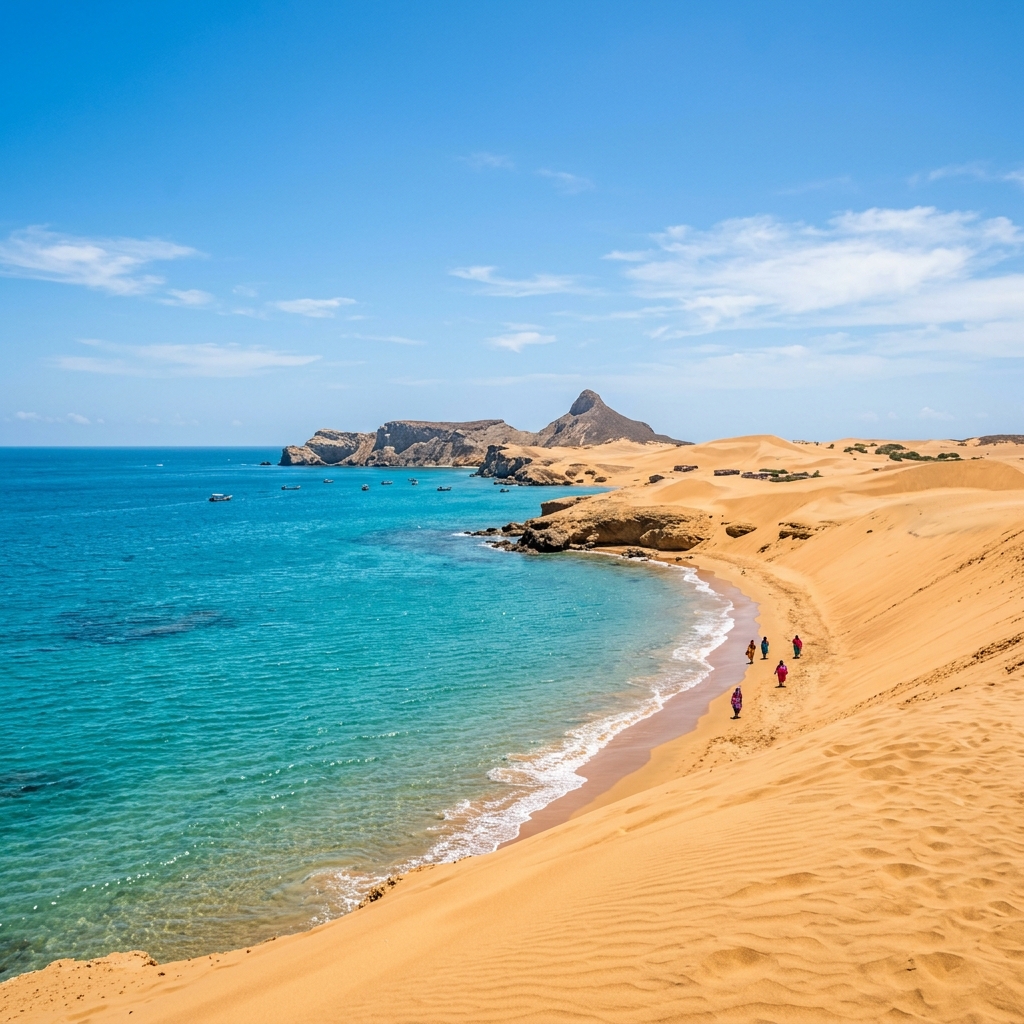
There are places in Colombia where the rhythm of the modern world simply fades into the sound of crashing waves and whistling desert winds. Cabo de la Vela, located at the northernmost reaches of the South American continent, is one such sanctuary. As we move through 2026, the allure of the Guajira Peninsula has only grown, attracting those who crave authenticity over luxury and silence over the bustle of urban centers. This is not a destination for the casual vacationer; it is a pilgrimage for the curious, a place where the Wayuu indigenous people continue to live in harmony with a landscape that is both beautiful and unforgiving.
Into the Heart of the Guajira Desert
The journey to Cabo de la Vela is an experience that prepares you for the isolation of the destination itself. Most travelers begin their transit from Riohacha, the gateway to the peninsula. As you venture further north, the lush greenery of the Colombian interior gives way to a sprawling, burnt-orange desert landscape defined by cacti, dried riverbeds, and small, dusty settlements. The arid intensity of the region is punctuated by the sudden, breathtaking appearance of the ocean, a stark contrast of deep teal against the rust-colored earth.
Arriving in the small fishing village of Cabo de la Vela, you are immediately struck by how little has changed here despite the passage of time. The architecture consists largely of wooden dwellings and traditional structures known as rancherías. Electricity is limited and cellular service is hit-or-miss, which serves as a powerful invitation to disconnect from your devices and engage with the people and vistas surrounding you. The village feels like an outpost at the edge of the earth, where the sun sets in a spectacular display of violet and gold every single evening.
The Spiritual and Natural Significance of the Cape
Cabo de la Vela is not merely a geographic point; it is a site of immense spiritual significance to the Wayuu people, who have inhabited this region for centuries. The windswept cliffs of El Pilón de Azúcar, the most prominent landmark in the area, offer a panoramic view of the entire coastline. Standing upon these rocks, you feel the raw power of the Caribbean wind, which is a constant companion in the Guajira. For the Wayuu, this area remains a sacred space, and visitors are encouraged to approach it with profound respect, acknowledging its history and the cultural heritage of the ancestral territories.
Below the cliffside, the beaches are pristine, characterized by soft sands and calm, protected waters perfect for swimming. Unlike the crowded resorts of the Colombian Caribbean coast, these waters are shared only with local fishermen and the occasional stray goat wandering down from the desert scrub. Whether you are observing the flight of regional birds or simply meditating on the intersection of sky and sea, the Cape provides a sense of stillness that is increasingly rare in the modern travel landscape of 2026.
Cultural Immersion and the Wayuu Way of Life
Spending time in the Guajira without involving yourself with the local culture would be a missed opportunity. The Wayuu are famous for their intricate weaving, particularly the vibrant colorful bags known as mochilas. In Cabo de la Vela, you will find these items being crafted right in front of you. Purchasing a piece directly from a weaver not only guarantees an authentic, high-quality souvenir but also supports the economic independence of the local families.
Food in the region is simple, relying heavily on the catch of the day. Expect fresh lobster, snapper, or locally caught shrimp prepared with traditional techniques and served alongside plantains and coconut rice. Embracing the local diet is part of the charm; everything is prepared fresh and enjoyed in open-air dining areas where the sea breeze keeps the atmosphere comfortable even during the hottest hours of the day.
Practical Tips
- Water is a precious commodity in the desert. Always carry extra bottled water with you, even if your accommodation provides it, as distribution can be inconsistent.
- Cash is king in the Guajira. ATM access is non-existent in the Cabo village, so draw all the funds you will need for your trip back in Riohacha or Uribia.
- Pack light and practical. You will want sun protection including a wide-brimmed hat, high-SPF sunscreen, and polarized sunglasses to manage the glare reflected off the golden sand and turquoise water.
- Respect local customs. Always ask for permission before taking photographs of the local Wayuu people or the interior of their dwellings.
- The temperature can drop significantly at night due to the wind. Bring a light windbreaker or a comfortable sweater for the evenings.
🕵️ Insider Secrets
- Timing your visit to the Pilón de Azúcar: Do not just visit at midday. Hike up early for sunrise to watch the desert colors shift from deep slate to blinding orange, or head up about an hour before dusk for the most intense sunset photography opportunities.
- The Kiteboarding connection: While Cabo is remote, it has become a global destination for kiteboarding enthusiasts due to the consistent, powerful winds. If you want to learn or watch, head to the beaches north of the village where professional kite camps operate.
- Beyond the village: If you have an extra day, arrange a 4x4 trip to Punta Gallinas. This is the northernmost point of South America and offers even more dramatic dunes and lagoons than those found in the Cabo area.
- The best time to go: The wind is strongest between December and March, which is fantastic for kiteboarders but can be gusty for sunbathing. If you prefer calmer waters for swimming, consider traveling during the shoulder months of May or October.
Cabo de la Vela remains a true oasis for those willing to endure a bit of dust and a long commute to find it. As we look at the trajectory of travel in 2026, the value of destinations that remain unpolished and rugged only increases. Leaving this corner of Colombia, you will likely find that the stillness of the desert and the clarity of the Caribbean horizon have imprinted themselves on you. It is a place that reminds us that sometimes the most memorable journeys are those that take us to the edge of the world, far away from the comforts of home, into a landscape that demands our full attention and respect.
eSIM for Colombia
Avoid high roaming fees. Get instant 4G/LTE data with Airalo as soon as you land in Bogotá or Medellín.
- Instant Activation
- No Physical SIM Card
- Local & Regional Plans
Stay in Where to Stay in San José del Palmar
Find top-rated hotels and deals. Best price guaranteed.
Explore Recommended San José del Palmar
Discover top-rated tours and activities. Book online for peace of mind.