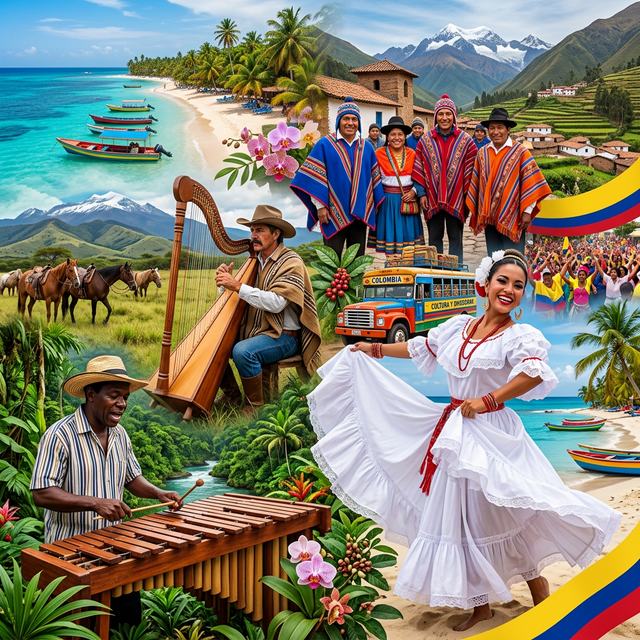
To travel through Colombia is to travel through several worlds at once. It is a country where the modern skyscrapers of Medellín share the same national identity as the ancient malocas of the Amazon and the flower-draped colonial balconies of Cartagena. In 2026, Colombia’s greatest treasure is not its gold or its emeralds, but its Cultural Diversity. This vibrant mosaic is the result of five centuries of interaction between Indigenous, African, and European peoples, creating a national identity that is as complex as it is joyful.
This guide explores the layers of Colombia’s cultural richness and how you can experience this living heritage in 2026.
The Guardians of Ancestral Wisdom: Indigenous Cultures
Colombia is home to over 100 distinct indigenous groups, each with its own language, cosmovision, and territory. In 2026, these communities are more than just historical footnotes; they are active leaders in environmental conservation and cultural preservation. From the Kogui of the Sierra Nevada de Santa Marta—who call themselves the "Older Brothers" and the rest of us the "Younger Brothers"—to the Wayuu of the Guajira desert, indigenous wisdom is a fundamental pillar of the country.
Engagement with these cultures in 2026 is based on mutual respect and sustainable tourism. Travelers can visit communities to learn about their ancestral weaving techniques, their medicinal plant knowledge, and their deep spiritual connection to the land. This is not a look into the past, but an invitation to learn from a world-view that prioritizes balance and harmony with nature.
The African Heartbeat: Afro-Colombian Heritage
The influence of Africa in Colombia is profound and powerful. Concentrated primarily on the Pacific and Caribbean coasts, Afro-Colombian culture has shaped the country's music, dance, and gastronomy. San Basilio de Palenque, the first free slave town in the Americas, remains a beacon of this heritage, where the Palenquero language (the only Spanish-based creole in the world) is still spoken.
In 2026, the Pacific Coast has emerged as a major cultural destination. Festivals like the Petronio Álvarez in Cali celebrate the sounds of the marimba and the traditional songs of the "cantadoras." This heritage is a testament to resilience and creativity, a rhythmic force that keeps the heart of Colombia beating.
The Art of the Hands: Artisanship as Identity
In Colombia, an object is never just an object; it is a story. The country's artisanship is a direct reflection of its regional diversity. In 2026, traditional crafts are celebrated as high art, with a focus on fair trade and the preservation of techniques that date back centuries.
- Wayuu Mochilas: These intricately woven bags from La Guajira are more than just fashion; each geometric pattern (Kaanas) represents a specific aspect of the weaver’s life and environment.
- Vueltiao Hat: A symbol of the Zenú culture, this hat is made from the caña flecha fiber and is recognized as a national symbol of Colombia.
- Mompox Filigree: In the riverside town of Mompox, silver and gold are woven into delicate, lace-like jewelry using techniques brought from Spain and refined over 400 years.
Festivals: The Celebration of Diversity
If you want to see Colombia’s diversity in its most explosive form, you must attend its festivals. In 2026, the Colombian calendar is a continuous celebration. The Carnaval de Barranquilla is the most famous, a masterpiece of oral and intangible heritage where European masquerades meet African rhythms and Indigenous dances.
In the south, the Black and White Carnival in Pasto is a unique celebration of racial equality, while the Flower Fair in Medellín honors the rural "Silletero" culture. These festivals are not just for tourists; they are the moments when the entire community comes together to reaffirm their shared identity and celebrate their differences.
Practical Tips for the 2026 Cultural Traveler
- Learn the Basics: Even a few words of Spanish—or an interest in a local dialect—can open doors. Colombians are incredibly proud of their heritage and love to share it with those who show genuine interest.
- Ethical Photography: Always ask for permission before taking photos of people, especially in indigenous and rural communities. In 2026, many communities have specific guidelines for visitors.
- Support Local: When buying handicrafts, look for the "Artesanías de Colombia" seal, which ensures the piece is authentic and the artist has been paid fairly.
- Travel with a Guide: To truly understand the nuances of Colombian culture, hire a local guide. They can provide the context and history that you won't find in a guidebook.
Colombia is a country that celebrates its complexity. It is a place where every person you meet and every town you visit adds another color to the national tapestry. In 2026, the richness of Colombia is waiting for you—not in its museums, but in its streets, its homes, and its songs. All you have to do is listen.
🕵️ Insider Secrets
- The "Magic Town" of Barichara: While everyone knows Cartagena, Barichara is considered the most beautiful village in Colombia. It is a masterclass in colonial stone masonry and offers a much quieter, more contemplative look at the country's Hispanic heritage.
- The Language of the Palenque: If you visit San Basilio de Palenque, ask for a short lesson in the local language. Learning how to say "hello" or "thank you" in Palenquero is a sign of deep respect for their unique history.
- The Flower Parade Behind the Scenes: In Medellín, visit the town of Santa Elena the week before the Flower Fair. You can watch the families building their massive "Silleteras" in their own backyards—it’s a much more intimate experience than the main parade.
eSIM for Colombia
Avoid high roaming fees. Get instant 4G/LTE data with Airalo as soon as you land in Bogotá or Medellín.
- Instant Activation
- No Physical SIM Card
- Local & Regional Plans
Stay in Where to Stay in Cartagena
Find top-rated hotels and deals. Best price guaranteed.
Explore Recommended Cartagena
Discover top-rated tours and activities. Book online for peace of mind.