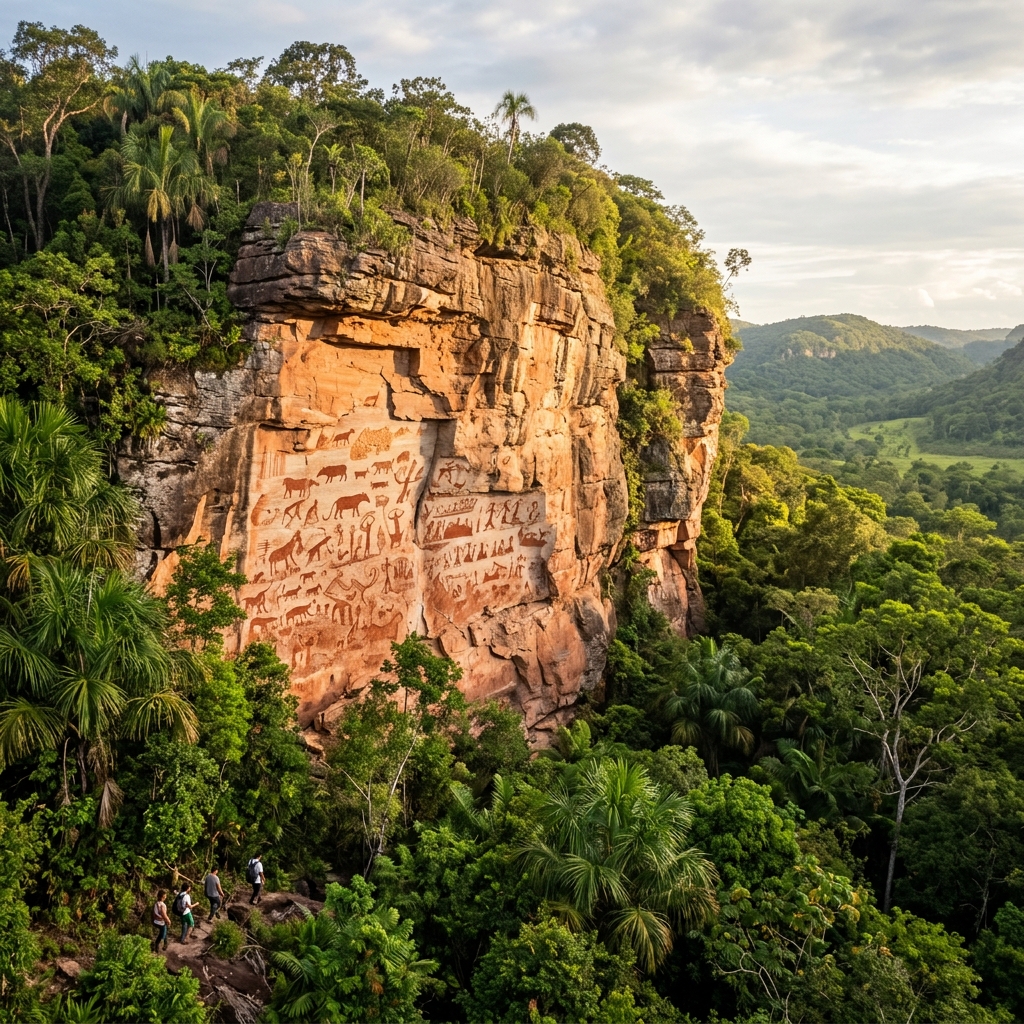
For decades, the department of Guaviare was a closed book to the outside world. But in 2026, it has emerged as one of the most staggering destinations in South America. Located at the precise point where the vast grasslands of the Orinoquía meet the dense canopy of the Amazon, Guaviare is a land of geological wonders and archaeological mysteries. It is home to one of the largest collections of rock art on the planet—thousands of 12,000-year-old paintings that have earned it the nickname "The Sistine Chapel of the Ancients." In 2026, San José del Guaviare is the gateway for travelers seeking a raw, frontier adventure that combines deep history with untamed nature.
This guide explores the wonders of Guaviare in 2026, from ancient pictographs to pink river dolphins.
The Serranía de la Lindosa: 12,000 Years of History
The crown jewel of Guaviare is the Serranía de la Lindosa. In 2026, this protected area is world-famous for its massive sandstone walls covered in vibrant red ochre paintings. These pictographs, created by some of the first humans to inhabit the Amazon, depict extinct ice-age megafauna like giant sloths and mastodons, alongside dancing humans and intricate geometric patterns.
In 2026, three main sectors are open to the public: Cerro Azul, Nuevo Tolima, and Los Colorados. Each requires a guided trek through the jungle. Standing before a wall that is 100 meters long and covered in ancient art is a humbling experience. It is a direct, visual connection to the dawn of human creativity in the Americas. Remember, in 2026, touching the paintings is strictly forbidden to ensure their preservation for another 12,000 years.
Stone Portals and Red Rivers: Geological Marvels
Guaviare’s landscape is as much about geology as it is about history. The Puerta de Orión is a massive natural rock arch, standing 12 meters high, that serves as a frame for the surrounding jungle. In 2026, it remains a favorite spot for photographers, especially during the December solstice when the stars align perfectly with the opening.
Another must-see is Caño Sabana, also known as the "Little Caño Cristales." During the rainy season (June to November), the riverbed turns a brilliant shade of pink and red due to the Macarenia clavigera plants. While smaller than its famous cousin in Meta, Caño Sabana offers a much more intimate experience in 2026, often with no other travelers in sight.
Encounters with the Wild: Pink Dolphins of Damas del Nare
One of the most magical experiences in Guaviare in 2026 is visiting the Laguna Damas del Nare. This deep, jungle-fringed lagoon is home to a resident population of Pink River Dolphins (Toninas). Unlike dolphins in other parts of the Amazon that can be shy, the dolphins here are famously curious and often approach boats to interact with visitors.
In 2026, the local community manages the tourism in the lagoon, ensuring that the dolphins are respected and the ecosystem is protected. Swimming in the dark, warm waters of the lagoon while a pink dolphin surfaces just a few meters away is a transformative experience that highlights the incredible biodiversity of the Guaviare region.
Practical Tips for the 2026 Frontier Traveler
- Getting There: San José del Guaviare is accessible by a 1.5-hour flight from Bogotá or an 8-hour bus ride from Villavicencio. In 2026, the road is fully paved and safe for travel.
- Guides are Mandatory: To visit the rock art sites and the lagoon, you must be accompanied by a certified local guide. In 2026, this supports the local peace process by providing sustainable livelihoods for former conflict participants.
- What to Pack: High-humidity gear is essential. Bring long-sleeved shirts and trousers to protect against insects and the sun, sturdy hiking boots, and a good hat. In 2026, we also recommend a dry bag for boat trips.
- Timing: The best time to visit is from December to March for hiking and rock art, or June to November to see the red rivers and the pink dolphins at their most active.
Guaviare is a place that challenges your perceptions of time and nature. It is a destination where you can walk through the history of humanity and the wonders of the natural world in a single day. In 2026, as the jungle mist rises over the ancient walls of Cerro Azul, Guaviare is no longer a hidden secret—it is a testament to the resilience and beauty of the Colombian frontier.
🕵️ Insider Secrets
- The Best Sunset: Head to Los Túneles Naturales, a series of ancient rock formations that look like a city of stone. Climbing to the top of the highest formation gives you a 360-degree view of the Amazon canopy as it turns purple at dusk.
- Local Flavor: Try Pescado Moquiado, a traditional indigenous method of slow-smoking fish in plantain leaves for up to 24 hours. It’s a taste of the jungle that you won't find in any city.
- Hidden Waterfalls: Ask your guide to take you to Las Delicias. It’s a series of hidden waterfalls and natural pools tucked away in a canyon, perfect for a refreshing swim after a morning of trekking.
eSIM for Colombia
Avoid high roaming fees. Get instant 4G/LTE data with Airalo as soon as you land in Bogotá or Medellín.
- Instant Activation
- No Physical SIM Card
- Local & Regional Plans
Stay in Where to Stay in San José del Guaviare
Find top-rated hotels and deals. Best price guaranteed.
Explore Recommended San José del Guaviare
Discover top-rated tours and activities. Book online for peace of mind.