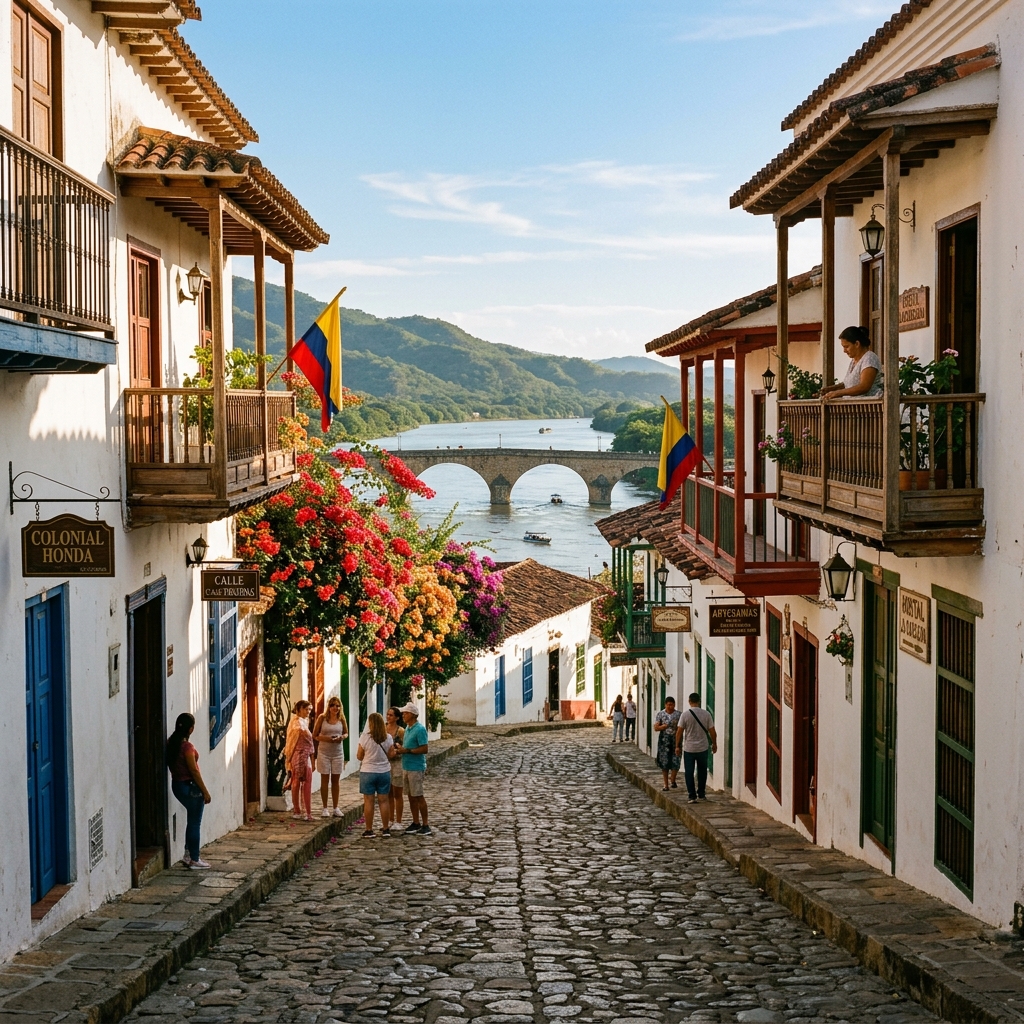
Nestled in the lush, humid embrace of the Tolima valley, Honda is far more than just a transit point on the map. As a traveler stepping into its streets in 2026, you will immediately notice something that separates this town from the more polished, tourist-heavy colonial hubs of Colombia: authenticity. Often called the City of Bridges, Honda served for centuries as one of the most vital ports along the Magdalena River, the artery that once fueled the entire colonial economy of the nation.
The Echoes of the Magdalena River
To understand Honda, you must understand the river. The Magdalena River is the backbone of Colombia, and for the Spanish Conquistadors and the merchants of the colonial era, Honda was the unavoidable threshold. Because the river becomes impassable for large boats further upstream due to the Honda rapids, all goods arriving from the Caribbean coast had to be offloaded here to be transported by mule train toward Bogotá. This unique logistical bottleneck made Honda an absurdly wealthy and cosmopolitan power center during the 17th and 18th centuries.
Today, you can walk along the banks of the mighty river and feel the weight of that history. The colonial architecture remains remarkably intact, with heavy wooden doors, stone-paved alleys, and white-washed walls draped in cascades of vibrant bougainvillea. Unlike the sterile preservation of some other heritage sites, Honda feels lived-in. You will see local fishermen casting nets into the river at sunset, just as they have for generations, oblivious to the grandeur of the colonial ruins that loom over their shoulders.
Architecture and the Art of the Bridge
Honda is famously known for its bridges—over 40 in total—that lace the town together across the Gualí and Magdalena rivers. Walking from the central plaza toward the water, you cross structures that range from colonial-era stone masterpieces to wrought-iron designs imported from England during the early 20th century. A highlight is the Puente Navarro, a retired iron bridge that stands as a silent monument to the engineering ambition of the late 1800s. Walking across it provides a panoramic view of the river that is unbeatable at midday or as the evening heat begins to break.
The Calle de las Trampas is another architectural marvel that you cannot miss. This narrow, winding street was designed in the colonial era to trap invaders—a literally defensive urban layout. Its cobblestones are uneven, worn smooth by centuries of foot traffic and mule hooves, and it remains one of the most photogenic spots in the entire country for any photography enthusiast looking for that specific, time-worn texture of Latin American history.
Life in the Tropics: A Slower Pace
There is a peculiar rhythm to life in Honda. The temperatures here are consistently high, a humid tropical heat that dictates the local lifestyle. Mornings are for early markets, where the bounty of the region—mangoes, papayas, and river fish—are traded with vigor. By midday, the town enters a period of collective stillness; residents take shade, and the streets turn quiet, save for the hum of ceiling fans and the distant call of tropical birds.
As evening falls, the social life of the town migrates to the plazas. Older generations gather on wooden benches outside the Cathedral to discuss the day, while younger locals and travelers congregate near the waterfront’s small eateries to enjoy a plate of viudo de capaz, a local river fish delicacy cooked with plantains and yuca. It is a simple, unpretentious, and deeply satisfying way to spend an evening in one of Colombia’s true hidden gems.
Practical Tips
- Getting there: Honda is easily accessible by bus from Bogotá or Medellín. The drive takes approximately four to five hours, offering varying landscapes from the high Andean peaks down into the tropical river valley.
- Best time to visit: Try to avoid the heavy rainy seasons of April/May and October/November if possible, as the humidity can be quite intense. February and July offer clearer skies and more manageable heat.
- Packing essentials: Light, breathable fabrics are non-negotiable. Bring sturdy walking shoes for the cobblestone streets, high-strength sunscreen, and plenty of effective insect repellent, especially if you plan to walk by the riverbanks during sunset or sunrise.
- Currency and connectivity: While most hotels and larger restaurants accept digital payments, keep a healthy supply of cash on hand for street food vendors, local artisan markets, and smaller transport services.
🕵️ Insider Secrets
- Visit the Museo del Río Magdalena: Situated in a beautiful colonial house, this museum is the definitive guide to understanding how the river shaped the nation’s history. It is often overlooked by casual tour groups but is essential for curious travelers.
- Sunset at the bridge: Head to the Puente Navarro just about 30 minutes before sundown. The way the light hits the swirling waters of the Magdalena is a spectacle that never makes it into the glossy brochures but stays with you forever.
- Seek out local fruit juices: Near the main market, look for the vendors selling juices made from local tropical fruits you have likely never heard of. Ask for a zapote or lulo juice; the freshness of the local harvest is unparalleled compared to what you find in the major cities.
- Stay in a restored house: Several of the old mansions have been converted into boutique guesthouses. Choose one with a central courtyard—the architectural design is intended to draw in cool breezes, and there is nothing like having your morning coffee surrounded by antique tiles and overgrown ferns.
Honda, Colombia, is a destination that rewards the patient traveler. In a world that is increasingly focused on the next big tourist attraction, Honda remains comfortably rooted in its storied past. Whether you are coming to study the transition of colonial engineering, looking for the perfect shot of a sun-drenched alleyway, or simply wanting to sit by the Magdalena and watch the country flow by, this town offers a profound connection to the heart of Colombia. It is not a place you visit to check off a list; it is a place you go to immerse yourself in the slow, rhythmic pulse of history.
eSIM for Colombia
Avoid high roaming fees. Get instant 4G/LTE data with Airalo as soon as you land in Bogotá or Medellín.
- Instant Activation
- No Physical SIM Card
- Local & Regional Plans
Stay in Where to Stay in Honda
Find top-rated hotels and deals. Best price guaranteed.
Explore Recommended Honda
Discover top-rated tours and activities. Book online for peace of mind.