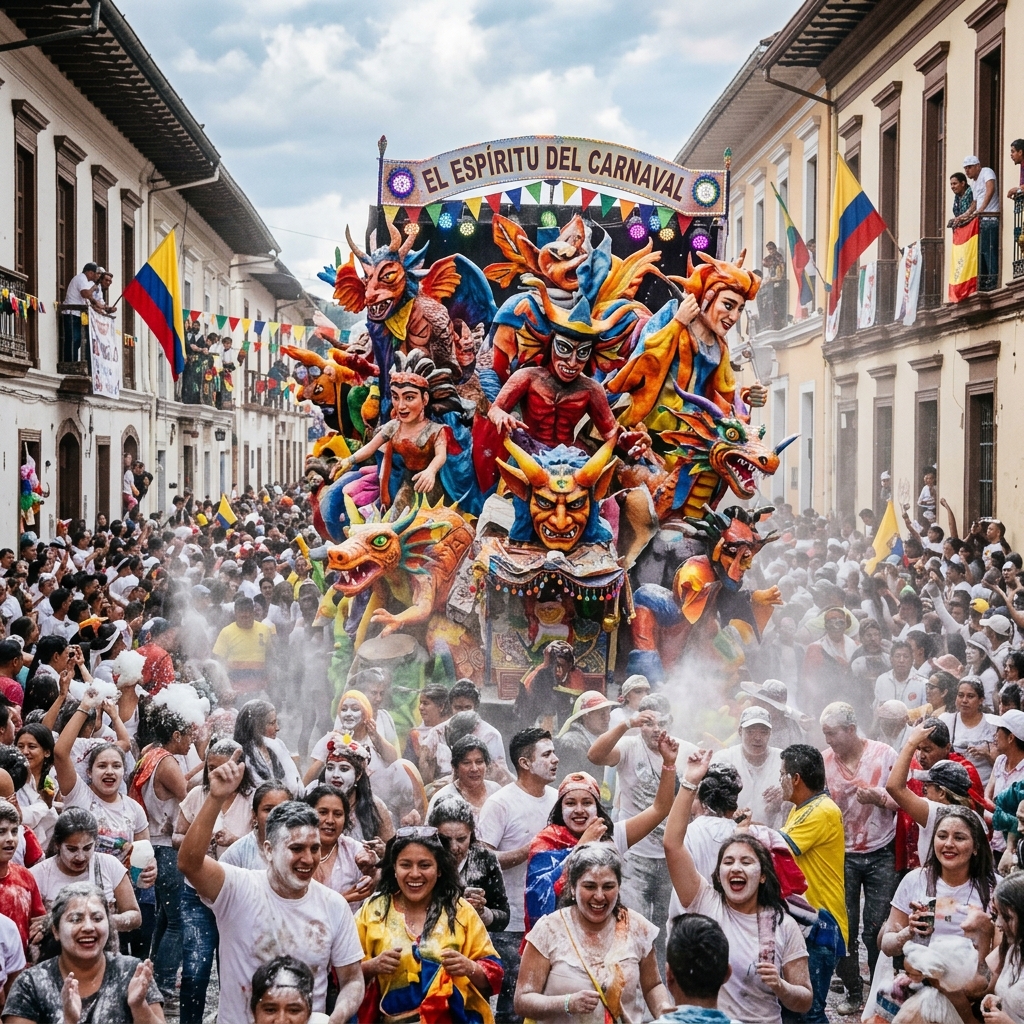
Nestled high in the Andean foothills of southwestern Colombia, the city of Pasto remains one of the country's best-kept secrets for travelers seeking authentic cultural immersion. While many visitors flock to the Caribbean coast or the bustling streets of Medellín, those who venture into the department of Nariño are rewarded with a deep dive into a civilization rooted in both indigenous wisdom and colonial heritage. The pulse of the city is dictated by the rhythms of the UNESCO-recognized Blancos y Negros Carnival, an event that transcends simple celebration to become a profound expression of collective memory and artistic mastery.
The Evolution of a Cultural Masterpiece
The Blancos y Negros Carnival, celebrated annually from January 2nd to 7th, is not merely a party; it is a complex social tapestry. Officially declared an Intangible Cultural Heritage of Humanity by UNESCO in 2009, its history is a narrative of resilience. The festival represents a unique synthesis, blending indigenous rituals, Spanish colonial celebrations, and African cultural influences. It is a historical mirror held up to the region’s identity, allowing residents to reclaim their past through art and public performance.
During the planning months leading up to the event, artisans in the workshops of Pasto—the "maestros"—labor tirelessly to create massive, intricate floats. These structures, built from wood, clay, and paper-mache, are marvels of engineering and aesthetics. They tell stories of contemporary politics, local myths, and the natural biodiversity of the Andes. When these gargantuan works of art make their way down the parade route during the Grand Parade on January 6th, the entire city transforms into an open-air gallery, where the boundary between the observer and the performer effectively dissolves.
The Meaning Behind the Colors
The name of the carnival itself provides a window into the local spirit. The "Day of the Blacks," occurring on January 5th, is a symbolic celebration of ethnic tolerance and collective joy. Historically, this day serves as a reminder of the social dynamics of the colonial era, but today it is defined by the tradition of painting faces with black cosmetic cream. Far from being divisive, this act fosters a powerful sense of equality—for one day, every citizen, regardless of status or background, appears as one.
The following day, "Day of the Whites," celebrates the cultural diversity of the region with talcum powder and white makeup. It is a sensory experience, characterized by the sight of white clouds floating through the streets and the sound of traditional Andean music echoing against the colonial facades of Pasto. This transition from black to white is more than an aesthetic choice; it is a meditative cycle that reinforces the city's commitment to unity and the preservation of its ancestral roots.
Beyond the Carnival: The Soul of Nariño
While the festival is the pinnacle of the calendar, Pasto offers year-round engagement with the arts. Exploring the city means visiting the local artisan workshops where the tradition of the "Barniz de Pasto" is kept alive. This pre-Columbian technique involves applying resin from the Mopa-Mopa bush to wood, creating intricate, colorful patterns that decorate everything from domestic bowls to religious icons. This craft, much like the carnival, is protected as intangible heritage, reflecting the meticulous patience inherent to the people of this region.
The surrounding geography of Pasto, dominated by the Galeras Volcano, shapes the local lifestyle and diet. Travelers should take time to sample the region's unique gastronomy, particularly "cuy" (guinea pig), which is an ancestral dish of the southern Andes. Enjoying this local staple in the cool, crisp mountain air provides a grounding experience that connects the visitor to the rhythms of Andean life that have persisted for centuries.
Practical Tips
- Travel Timing: If you plan to attend the carnival, logistics must be managed well in advance. Accommodations in Pasto typically sell out months before January, so book your stay as early as July or August of the previous year.
- Altitude Awareness: Pasto sits at over 2,500 meters above sea level. Acclimatize by staying hydrated and taking it easy for the first 24 hours of your arrival to avoid altitude sickness.
- Dress Code: During the carnival, expect to be covered in talcum powder and cosmetic cream. Wear old, comfortable clothing that you do not mind getting dirty; part of the fun is fully participating in the festivities.
- Transportation: The Antonio Nariño Airport serves the city with daily flights from Bogotá. From the airport, it is a scenic 45-minute drive into the city center.
🕵️ Insider Secrets
- The Pre-Carnival Buzz: If you find the peak of the carnival too overwhelming, visit Pasto in late December. You can often witness the final touches being applied to the massive float structures inside the artisan workshops, providing a more intimate look at the craftsmanship involved.
- Local Coffee Culture: Visit the smaller, independent cafes in the city center. Nariño produces some of the most acclaimed volcanic-grown coffee in the world; tasting it in the capital of the region is an essential experience for any coffee enthusiast.
- Strategic Viewing: For the main parades, avoid the crowded plazas if you prefer a bit of space. Look for tickets to the "grandstands" (palcos) early, as they offer the best view of the mechanical movements of the floats without the crush of the crowd.
- The Lagoon of Cocha: A 45-minute drive from the city, the Lago de la Cocha is a stunning highland lake. It offers a peaceful respite from the urban intensity of the city and is home to the magical island of Corota, a must-visit for nature photographers.
Pasto is not a destination for the passive traveler. It demands that you engage, that you tolerate the mess of the street celebrations, and that you respect the quiet legacy of its artisans. In return, it offers a window into a side of Colombia that remains deeply connected to its ancestral roots. Whether you find yourself dancing in the streets covered in talcum powder or quietly admiring the iridescent glow of a varnished bowl in a workshop, the spirit of Pasto stays with you long after you descend from the heights of the Andes.
eSIM for Colombia
Avoid high roaming fees. Get instant 4G/LTE data with Airalo as soon as you land in Bogotá or Medellín.
- Instant Activation
- No Physical SIM Card
- Local & Regional Plans
Stay in Where to Stay in Pasto
Find top-rated hotels and deals. Best price guaranteed.
Explore Recommended Pasto
Discover top-rated tours and activities. Book online for peace of mind.